






Table of Contents
Maximizing ROI with Clean Air
This article aims to provide a comprehensive financial analysis of industrial air quality, shifting the perspective of air filtration from a mandatory compliance cost to a strategic investment that yields tangible returns through energy efficiency, reduced maintenance liability and improved workforce productivity.
Introduction: The Financial Imperative of Dust Collector System
In the modern industrial landscape, the conversation surrounding air quality has shifted dramatically. It is no longer just about meeting basic regulatory standards or ticking a box for safety inspections. Today, forward-thinking facility managers and business owners view air quality through the lens of profitability and operational efficiency. The return on investment (ROI) associated with installing a high-quality dust collecting system is becoming a critical metric in capital expenditure planning.
While the initial outlay for industrial filtration equipment can be significant, the long-term financial picture reveals a different story. When air is laden with particulate matter, it creates a drag on every aspect of the manufacturing process. Machines work harder, energy bills climb and the workforce faces health risks that translate directly into financial liability. By calculating the cost savings generated by an efficient system, businesses can uncover hidden revenue streams that arguably pay for the equipment over its operational lifespan. This analysis explores how clean air acts as a catalyst for cost reduction across energy consumption, maintenance schedules and human capital management.
Dust Collection Systems: Optimizing Energy Consumption
One of the most immediate and calculable areas of savings involves energy usage. Many older or poorly designed filtration setups run at constant speeds, regardless of the actual demand, draining electricity and driving up operational costs.
When a system is inefficient, the fans and motors must work excessively hard to pull air through clogged filters or poorly designed ductwork. This resistance, known as pressure drop, is a primary driver of wasted electricity. By upgrading to an efficient system, facilities can maintain optimal airflow with significantly less energy. The financial impact here is twofold: there is an immediate reduction in monthly utility bills and there is a reduction in the peak demand charges often levied by utility companies on industrial facilities.
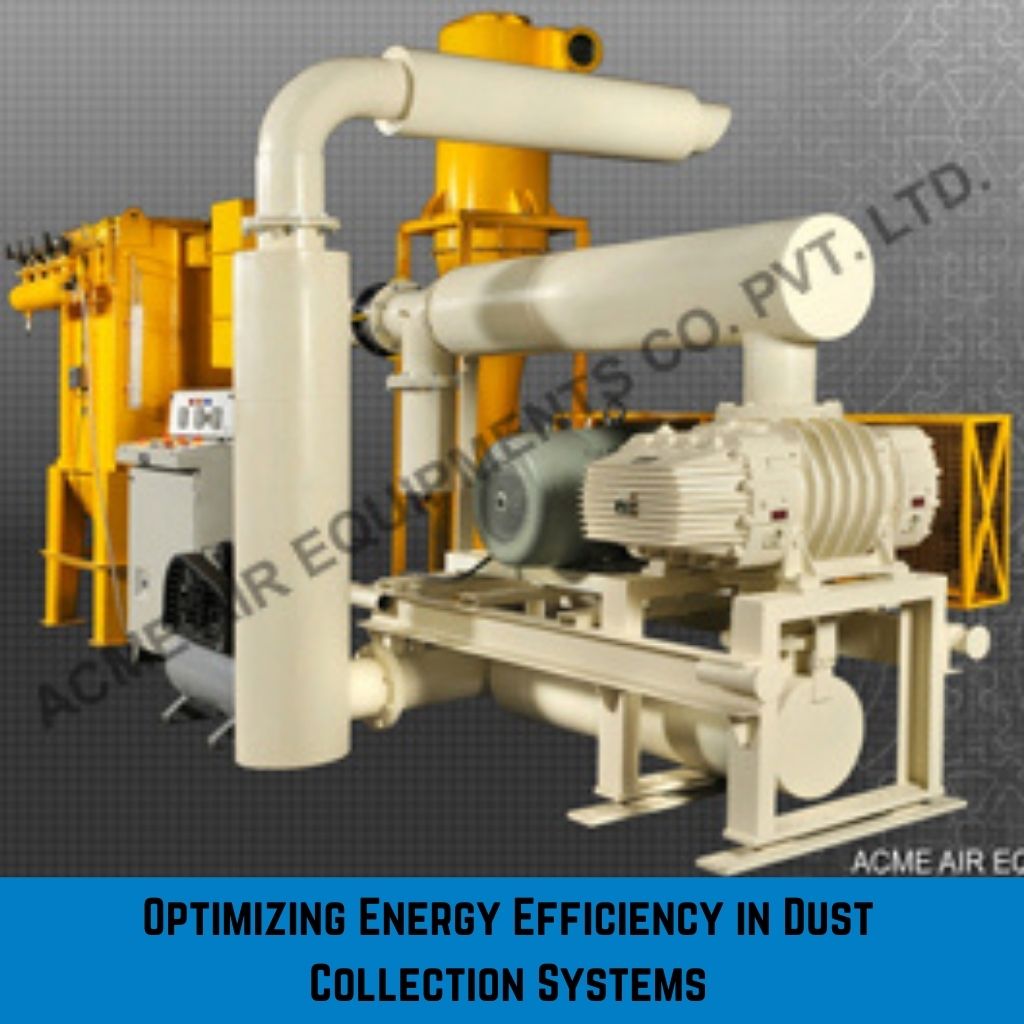
Furthermore, advanced dust removal systems often incorporate energy recovery features.5 In climate-controlled environments, exhausting heated or cooled air to the outside is equivalent to throwing money out the window. High-efficiency systems can filter air to a level where it is safe to recirculate back into the facility. This recirculation drastically reduces the load on HVAC systems, as they do not need to constantly condition new make-up air from the outside. Over a fiscal year, the savings on heating and cooling alone can represent a substantial portion of the system’s total cost of ownership.
Industrial Dust Collector System: Reducing Maintenance Overhead
Maintenance budgets are often consumed by reactive repairs rather than proactive care. Dust is abrasive and intrusive; when left unchecked, it infiltrates sensitive machinery, control panels and mechanical gears. This intrusion accelerates wear and tear, leading to premature equipment failure and costly unplanned downtime. Implementing a robust industrial dust collector system acts as a shield for capital equipment, preserving the lifespan of the entire production line.
The cost savings here are found in the reduction of replacement parts and the labor hours required for cleaning and repairs. Without adequate extraction, dust settles on sensors, causing false readings that stop production or it builds up on motors, causing them to overheat. The financial loss associated with a production line stopping for even an hour can dwarf the cost of filter replacements.
Additionally, the maintenance of the collection unit itself must be considered. Older units often require frequent, messy and time-consuming filter changes. A modern automatic dust collector utilizes pulse-jet cleaning technology, which periodically sends a burst of air through the filters to dislodge dust cake without shutting down the system. This automation extends the life of the filters and ensures the system runs at peak efficiency without constant manual intervention.12 By minimizing the frequency of filter changes and the labor associated with them, the operational expenditure drops significantly.
Dust Control System: Mitigating Health Claims and Liability
Perhaps the most significant, though sometimes intangible, ROI factor is the health and safety of the workforce. Poor air quality is directly linked to occupational respiratory issues, dermatitis and other health complications. A comprehensive dust control system is the first line of defense against these risks and from a financial perspective, it serves as a risk management tool.
Health claims and workers’ compensation insurance premiums are major expenses for industrial employers. When a facility demonstrates a commitment to air quality that exceeds minimum standards, it reduces the likelihood of chronic health issues developing among staff. This reduction leads to fewer insurance claims and can often be leveraged to negotiate lower premiums with insurance providers.
Beyond direct medical costs, there is the issue of absenteeism and productivity. Workers who are breathing clean air are less prone to fatigue and illness. High concentrations of airborne particulates can cause headaches, eye irritation and respiratory distress, all of which lower productivity and morale. By investing in a high-performance dust extraction system, companies are investing in human uptime. The retention of skilled labor is also a financial factor; a clean, safe working environment is a strong competitive advantage in recruiting and retaining top talent, saving the considerable costs associated with hiring and training new staff.
Our Other Product
Tri Lobe Roots BlowerDust Collection System Manufacturers: The Value of Customization
To achieve maximum ROI, a one-size-fits-all approach is rarely effective. The specific characteristics of the dust – whether it is combustible, abrasive, sticky or toxic – dictate the engineering requirements. Leading dust collection system manufacturers play a pivotal role in the financial equation by designing systems tailored to the specific application.
Working with a specialized dust collection system manufacturer allows a facility to avoid the costs of over-engineering or under-engineering. Customization ensures that the ductwork geometry, filter media and fan sizing are perfectly aligned with the facility’s layout and production volume.
This tailored approach prevents the common financial pitfall of high pressure drops caused by poor duct design. It also ensures compliance with specific industry regulations, avoiding potential fines. This partnership approach transforms the purchase from a commodity transaction into a strategic consulting engagement that optimizes long-term value.
Central Dust Collection System: Scalability and Workflow
For facilities with multiple generation points, the decision often lies between point-of-use units and a centralized approach. A central dust collection system often provides a better ROI for larger operations due to economies of scale. Instead of maintaining and powering multiple motors and fans scattered throughout the plant, a single, highly efficient unit handles the load.
Centralization simplifies waste management. Instead of emptying distinct bins at various locations, dust is conveyed to a single discharge point, often directly into a dumpster or a briquetting machine for recycling. This streamlines waste handling logistics, reducing the labor hours dedicated to housekeeping. Furthermore, a central system frees up valuable floor space near production machinery, allowing for better workflow optimization and potential expansion of production lines.
However, the design must accommodate future growth. A scalable system allows for additional ducting runs to be added without replacing the core extraction unit. This future-proofing is a critical aspect of financial planning, ensuring that the dust collector systems installed today remain relevant and capable as the business grows.
Read Our Article
The Importance Of Dust Filter Cleaning SystemsVacuum Dust Collector System: Housekeeping and Secondary Savings
While primary extraction handles airborne particulates at the source, fugitive dust that settles on floors and rafters presents a secondary hazard. A vacuum dust collector system designed for heavy-duty housekeeping prevents the accumulation of combustible dust layers, which pose a severe explosion risk.
From a financial standpoint, the ROI of avoiding a catastrophic event like a dust explosion is incalculable. However, even on a day-to-day basis, efficient housekeeping systems reduce the labor required for cleaning. Manual sweeping is inefficient and often redistributes dust back into the air, counteracting the benefits of the primary filtration. High-vacuum systems capture this material permanently.
Moreover, in industries working with precious metals or expensive raw materials, these systems allow for the recovery of product. Dust collected from the process can often be reprocessed or sold, turning what was once a waste product into a revenue stream that directly offsets the cost of dust collection system operation.
Dust Collection Unit: Enhancing Product Quality
Product quality is another area where air filtration drives financial returns. In industries such as painting, coating or electronics manufacturing, airborne dust is a contaminant that causes defects. A single dust particle on a wet finish or a sensitive circuit board can result in a rejected product.
An efficient dust collection unit ensures that the production environment remains pristine, significantly lowering the scrap rate. Every product that does not need to be reworked or discarded represents pure profit. When the cost of scrap and rework is annualized, the savings provided by clean air often reveal themselves to be substantial. This reliability also protects the brand reputation; consistently delivering defect-free products helps secure long-term contracts and justifies premium pricing.
Dust Collectors: Compliance and Regulatory Security
Navigating the complex web of environmental and safety regulations is a financial burden for any industrial operation. Non-compliance can result in hefty fines, legal battles and even forced shutdowns. Dust collectors that are properly maintained and monitored provide a layer of security against these regulatory risks.
Modern systems can be equipped with emissions monitoring technology that provides data to prove compliance during inspections. Avoiding a single significant fine or a mandated production halt can justify the investment in premium dust collection systems. Furthermore, as regulations regarding air quality tighten globally, investing in a system that exceeds current standards future-proofs the facility against upcoming legislative changes, avoiding the need for panicked, expensive upgrades down the line.
Conclusion:
When evaluating the cost of dust collection system investments, it is imperative to look beyond the sticker price. The true value is found in the synthesis of energy savings, extended machinery life, reduced medical and insurance costs and improved product quality. A well-engineered dust collecting system is not merely a utility; it is a production asset that contributes to the bottom line. By integrating advanced filtration technology, businesses protect their most valuable assets—their equipment and their people-while simultaneously uncovering efficiencies that drive long-term profitability.
FAQs About Dust Collection System
How does a dust collection system reduce energy costs?
Efficient systems use variable frequency drives to adjust power based on demand and allow for the recirculation of conditioned air, reducing HVAC loads.
Can a dust collector really lower insurance premiums?
Yes, by improving air quality and reducing fire or explosion risks, facilities often qualify for lower premiums on health and liability insurance.
What is the financial benefit of an automatic filter cleaning system?
Automatic cleaning extends filter life and prevents system downtime, significantly reducing ongoing maintenance labor and replacement part costs.
Why is a central dust collection system often more cost-effective than portable units?
Central systems streamline maintenance to a single location and often operate more efficiently per volume of air moved compared to running multiple smaller motors.
How does dust extraction impact product quality and scrap rates?
By removing airborne contaminants, the system prevents dust from settling on products during manufacturing, reducing defects and expensive rework.
About Author
CEO
Mr. Vishwesh Pardeshi is the CEO of Acme Air Equipments Company Pvt. Ltd., an industrial and engineering goods manufacturing company based in Ahmedabad, Gujarat (India). He has taken over the responsibility from founding Partners and Directors of the Company, and is now leading a talented group of professionals since 2020 by bringing in vast industrial and management expertise. By qualification, he holds a Bachelor Degree in Mechanical Engineering and also holds a MBA degree from reputed institutes. Under his leadership, the Company has successfully executed prestigious projects by delivering high quality and world class products from a state of the art manufacturing facility which combines CNC-enabled precision manufacturing and strong after sales support. In line with the Vision, Mission and Core Values of the Organization, Mr. Vishwesh Pardeshi continues to drive Quality, Reliability and Global Expansion at Acme Air Equipments Co. Pvt. Ltd.