






Table of Contents
AI-Generated Summary:
This article explores the role of pneumatic conveying systems in the pharmaceutical industry, focusing on their use for efficient and safe powder transfer. Pneumatic conveying is a critical technology for handling powders in pharmaceutical manufacturing, offering benefits such as reducing contamination, improving productivity, and ensuring product quality. The article covers how these systems work, the types of pneumatic conveying methods used, and their specific applications in pharmaceutical powder transfer. It also highlights the advantages, challenges, and best practices for utilizing pneumatic conveying systems in pharmaceutical environments.
Introduction
In the pharmaceutical industry, the transfer of powders and bulk materials is an essential aspect of the manufacturing process. Whether for active pharmaceutical ingredients (APIs), excipients, or finished formulations, maintaining quality and efficiency during powder transfer is crucial. One of the most effective methods for transporting powders is through pneumatic conveying systems. These systems use air or gas to move powders, granules, and other bulk materials through pipes or ducts.
Pneumatic conveying offers a solution that minimizes contamination, reduces manual handling, and improves operational efficiency. In this article, we explore how pneumatic conveying systems are used in the pharmaceutical industry to transfer powders and the significant benefits they bring to the table.
What Are Pneumatic Conveying Systems?
Pneumatic conveying systems are mechanical systems designed to transport bulk materials, especially powders, via air or other gases. These systems use a combination of airflow and pressure to move materials through pipelines from one location to another. The materials can be moved either under positive pressure (pressure conveying) or vacuum (vacuum conveying), depending on the system design and the specific requirements of the process.
The systems can be used for various pharmaceutical applications, such as transporting APIs, excipients, and intermediate products, and they are especially useful in environments that require a high level of hygiene and minimal contamination.
How Pneumatic Conveying Works in Pharmaceutical Manufacturing
The process of pneumatic conveying can be broken down into a few simple steps:
- Material Introduction: Powder or granular material is introduced into the pneumatic conveying system from a storage bin or hopper.
- Airflow Generation: A blower or compressor generates the required airflow. In pressure systems, the air is pushed through the pipeline, while in vacuum systems, air is sucked through the system to create a low-pressure environment.
- Transportation: The powder is carried along the pipeline by the moving air, which helps overcome friction and other resistance factors. The material can be transported over long distances, even to different floors or buildings within a pharmaceutical plant.
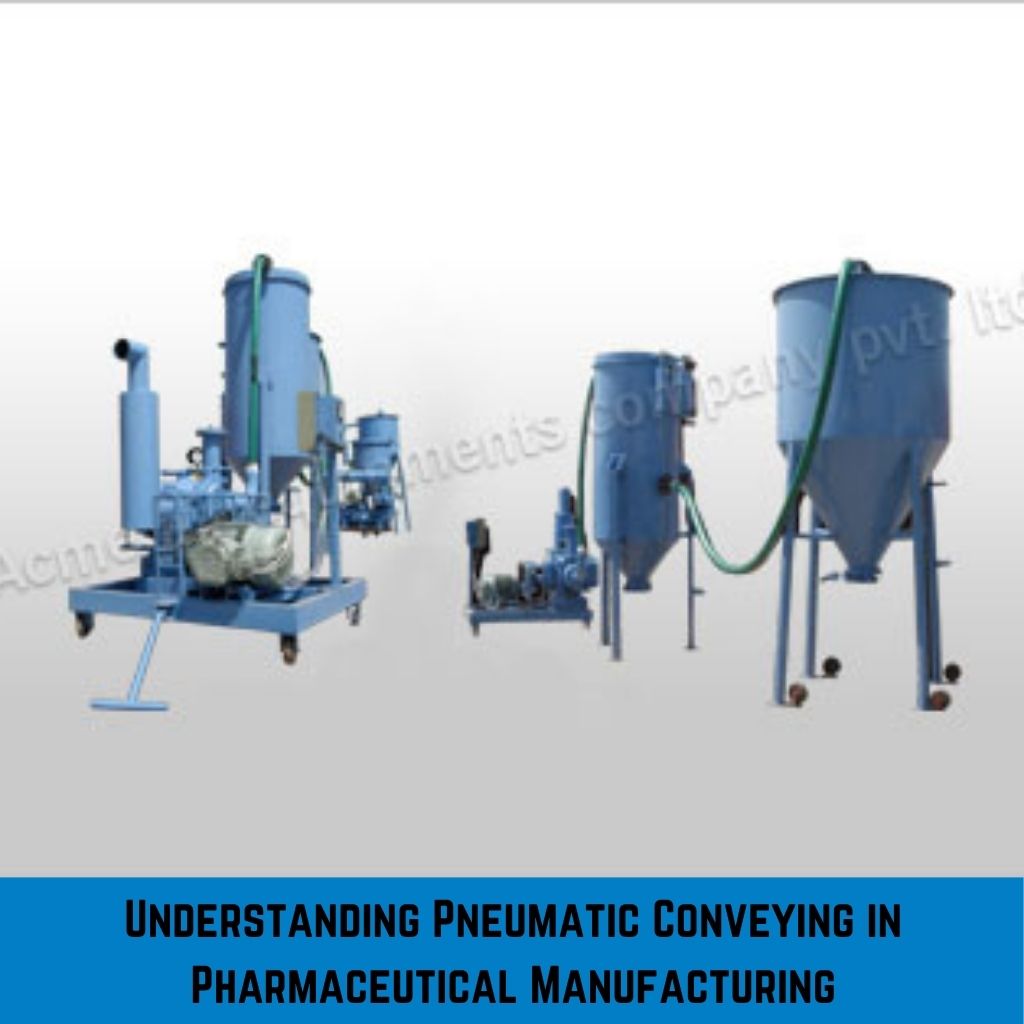
- Separation and Collection: Once the material reaches its destination, it is separated from the air in a cyclone separator, bag filter, or other collection devices. The powder is then deposited into storage bins, mixing equipment, or directly into processing units.
Types of Pneumatic Conveying Systems in Pharmaceutical Applications
Pneumatic conveying systems can be broadly categorized into two types based on the mode of airflow: pressure conveying systems and vacuum conveying systems.
Pressure Conveying Systems
In a pressure conveying system, air or gas is used to push the powder through the pipeline from the source to the destination. The material is injected into the airflow, and the pressure propels it through the system. This method is ideal for transferring materials over longer distances and through complex pipelines.
Advantages:
- Suitable for long-distance transfer.
- Capable of handling a wide range of powders.
- Faster transportation of material.
Applications in Pharmaceuticals:
- Transporting APIs from one area of the plant to another.
- Moving excipients into the blending or mixing equipment.
Vacuum Conveying Systems
Vacuum conveying systems, on the other hand, operate by creating a vacuum within the pipeline. The powder is drawn into the system and carried by the moving air. This method is commonly used when powders need to be transferred into hoppers, bins, or silos, or when material handling needs to minimize exposure to air.
Advantages:
- Reduced risk of contamination.
- Ideal for transferring fragile powders that are sensitive to air exposure.
- Typically used in enclosed systems for cleaner operations.
Applications in Pharmaceuticals:
- Transferring delicate APIs that are sensitive to moisture or air.
- Handling highly potent powders in a controlled and contained environment.
Applications of Pneumatic Conveying in the Pharmaceutical Industry
Pneumatic conveying systems find several important applications in the pharmaceutical industry. These applications help streamline operations, improve efficiency, and ensure the high quality and safety of the products being manufactured.
Active Pharmaceutical Ingredient (API) Transfer
One of the key uses of pneumatic conveying systems in the pharmaceutical industry is the safe and efficient transfer of active pharmaceutical ingredients (APIs). APIs are often delicate, expensive, and require careful handling. Pneumatic conveying allows APIs to be transferred with minimal handling and reduced risk of contamination, ensuring that the final pharmaceutical product meets the required quality standards.
Excipients Transfer
Excipients, the inactive ingredients used in the formulation of drugs, need to be transferred to different processing areas for blending, granulation, and mixing. Pneumatic conveying systems offer a hygienic and efficient way to move excipients, ensuring that the formulation process is consistent and contamination-free.
Powder Blending and Mixing
In the pharmaceutical industry, powders often need to be blended or mixed in precise ratios. Pneumatic conveying systems can be integrated with blending or mixing equipment to transfer materials directly, reducing the chances of human error and ensuring uniform mixing of powders.
Packaging of Pharmaceutical Powders
Once powders are mixed or processed, they need to be packaged in containers such as bottles, bags, or pouches. Pneumatic conveying can efficiently transport powders to the packaging stations, ensuring that the right amount of material is transferred with minimal wastage.
Powder Recovery and Waste Handling
In pharmaceutical manufacturing, waste or leftover powders from various stages of production can be efficiently recovered using pneumatic conveying systems. These systems help transport powder waste to appropriate collection areas, allowing for recycling or proper disposal, thus improving material utilization and reducing waste.
Advantages of Pneumatic Conveying in Pharmaceutical Powder Transfer
The use of pneumatic conveying systems in pharmaceutical powder transfer offers several advantages:
Reduced Risk of Contamination
Pneumatic conveying systems can be designed to be fully enclosed, minimizing the risk of contamination from the surrounding environment. This is especially critical in pharmaceutical applications, where maintaining a sterile environment is essential to ensure the safety and efficacy of the final product.
Improved Efficiency and Productivity
By automating the transfer of powders, pneumatic conveying systems eliminate the need for manual handling, which can slow down production. These systems enable continuous, high-speed powder transfer, increasing the overall efficiency of the manufacturing process.
Enhanced Worker Safety
In pharmaceutical plants, workers may be exposed to hazardous powders and chemicals. Pneumatic conveying reduces the need for direct human involvement in the transfer process, reducing the risk of exposure to harmful substances and improving worker safety.
Reduced Material Loss
Pneumatic conveying systems are highly efficient at moving materials with minimal losses. This is especially important in pharmaceutical manufacturing, where the materials used are often expensive, and any loss could affect the overall profitability of the process.
Flexibility and Scalability
Pneumatic conveying systems can be easily adapted and scaled to meet the specific needs of a pharmaceutical plant. Whether transferring small amounts of powder or large quantities, the system can be adjusted to accommodate changes in production demands.
Challenges of Pneumatic Conveying in Pharmaceutical Applications
While pneumatic conveying systems offer significant benefits, there are some challenges that need to be addressed:
System Design Complexity
The design of pneumatic conveying systems for pharmaceutical applications requires careful consideration of factors such as airflow rates, pressure, material characteristics, and the length and layout of pipelines. A poorly designed system can lead to inefficiencies or contamination risks.
Powder Degradation
Some pharmaceutical powders are sensitive to mechanical forces or excessive shear stress. When designing pneumatic conveying systems, it is essential to ensure that the system operates in a manner that minimizes powder degradation, particularly for delicate ingredients.
Maintenance and Cleaning
Pneumatic conveying systems need regular maintenance and cleaning to ensure that they operate efficiently and remain contamination-free. Cleaning the system is especially important in the pharmaceutical industry, where residue from previous batches can cause cross-contamination.
Best Practices for Optimizing Pneumatic Conveying Systems in Pharmaceutical Plants
To maximize the benefits of pneumatic conveying systems, pharmaceutical manufacturers should follow these best practices:
- System Design and Selection: Choose a conveying system that is tailored to the specific needs of your powder transfer processes. Factors such as material characteristics, distances to be covered, and environmental conditions must be considered.
- Regular Cleaning and Maintenance: Implement a rigorous cleaning and maintenance schedule to ensure that the system operates efficiently and meets hygiene standards.
- Monitoring and Control: Use sensors and automated controls to monitor the system’s performance in real-time. This helps identify any issues early and ensures consistent material flow and transfer.
Conclusion
Pneumatic conveying systems are a vital technology for transferring powders and bulk materials in the pharmaceutical industry. They provide a safe, efficient, and cost-effective way to handle materials like APIs, excipients, and other powder-based substances, while reducing contamination and improving worker safety. By following best practices for design, maintenance, and operation, pharmaceutical manufacturers can ensure that their pneumatic conveying systems enhance productivity, maintain product quality, and support compliance with industry regulations.
FAQs
What is the main advantage of using pneumatic conveying in pharmaceutical powder transfer?
Pneumatic conveying systems offer reduced risk of contamination, enhanced product quality, and increased efficiency in powder transfer processes.
What types of materials can be conveyed using pneumatic systems?
Pneumatic conveying systems are ideal for transferring powders, granules, and other bulk materials commonly used in the pharmaceutical industry.
How does a vacuum conveying system differ from a pressure conveying system?
Vacuum conveying systems draw the material into the pipeline, while pressure systems push it through the pipeline using air or gas pressure.
Can pneumatic conveying systems be customized for specific pharmaceutical applications?
Yes, pneumatic conveying systems can be designed and customized to meet the unique needs of different pharmaceutical applications, including specific powders, distances, and environmental conditions.
What are the challenges of using pneumatic conveying systems in pharmaceutical manufacturing?
Challenges include system design complexity, potential powder degradation, and the need for regular maintenance and cleaning to avoid contamination.
How do pneumatic conveying systems improve worker safety?
By reducing the need for manual handling of powders, pneumatic systems minimize workers’ exposure to hazardous materials, thereby improving safety.
How do pneumatic conveying systems prevent cross-contamination?
These systems are often fully enclosed, preventing the powders from coming into contact with the surrounding environment and reducing the risk of cross-contamination.
What is the role of filtration in pneumatic conveying systems?
Filtration is used to separate the transported powder from the airflow, ensuring that powders are collected cleanly and without contaminating the environment.
Can pneumatic conveying systems handle delicate powders?
Yes, pneumatic conveying systems can be designed to handle fragile or sensitive powders with minimal mechanical stress, preventing degradation.
What are the key factors to consider when designing a pneumatic conveying system for a pharmaceutical plant?
Factors to consider include material characteristics, conveying distance, airflow rates, system layout, and regulatory requirements.
About Author
CEO
Mr. Vishwesh Pardeshi is the CEO of Acme Air Equipments Company Pvt. Ltd., an industrial and engineering goods manufacturing company based in Ahmedabad, Gujarat (India). He has taken over the responsibility from founding Partners and Directors of the Company, and is now leading a talented group of professionals since 2020 by bringing in vast industrial and management expertise. By qualification, he holds a Bachelor Degree in Mechanical Engineering and also holds a MBA degree from reputed institutes. Under his leadership, the Company has successfully executed prestigious projects by delivering high quality and world class products from a state of the art manufacturing facility which combines CNC-enabled precision manufacturing and strong after sales support. In line with the Vision, Mission and Core Values of the Organization, Mr. Vishwesh Pardeshi continues to drive Quality, Reliability and Global Expansion at Acme Air Equipments Co. Pvt. Ltd.