







Table of Contents
Turbo Blower Technology Decoded
This article helps engineers, plant managers and technical buyers clearly understand how a modern turbo blower works, with a practical deep dive into air bearings, PMSM motors and multi core control architecture, so it becomes easier to discuss requirements, compare designs and work effectively with any Turbo Blower Manufacturer.
Turbo Blower Foundations and Overall Design
A Turbo Blower looks like a compact box on the outside, but inside it is a carefully balanced combination of aerodynamics, power electronics and precision mechanics. At the center, an impeller rotates at very high speed, pulling air in at the eye and pushing it outward into a diffuser that converts velocity into useful pressure. This dynamic compression principle creates a smooth, continuous flow, which is ideal for processes that dislike pulsation and vibration.
The machine is typically direct driven, which means the impeller is mounted on the same shaft as the motor rotor. Removing belts and gearboxes cuts losses, simplifies alignment and reduces the number of wearing parts. Around the rotating group sits a rigid housing that controls airflow, supports the bearings and protects sensitive components. All of this is wrapped in insulation and acoustic treatment so the Turbo Blower Technology can work quietly in demanding plant environments.
Every design choice supports the same high level goal. Energy should move cleanly from the electrical supply to the process air, with as little waste as possible and with minimal maintenance. Once you see the Turbo Blower as an energy pathway shaped by engineering decisions, the rest of the technology becomes more intuitive and far easier to evaluate.

Blower Internal Airflow and Compression Structure
Inside the blower, airflow follows a logical path from inlet to discharge. Air enters through a shaped inlet that guides it smoothly into the center of the spinning impeller. The blade geometry is tuned so that the air accelerates without separating from the surface, which helps preserve efficiency and avoid unwanted noise. As the air leaves the impeller at high speed, it enters the diffuser where kinetic energy is converted into pressure in a controlled manner.
The geometry of the diffuser channels, volute and discharge transitions is as important as the impeller itself. Poorly designed flow passages can cause recirculation, pressure loss and unstable operation. A well designed internal structure keeps velocity and pressure changes gradual, giving the process a stable and predictable air supply. This is particularly important in aeration, combustion and process air systems, where even modest fluctuations can disturb control loops or product quality.
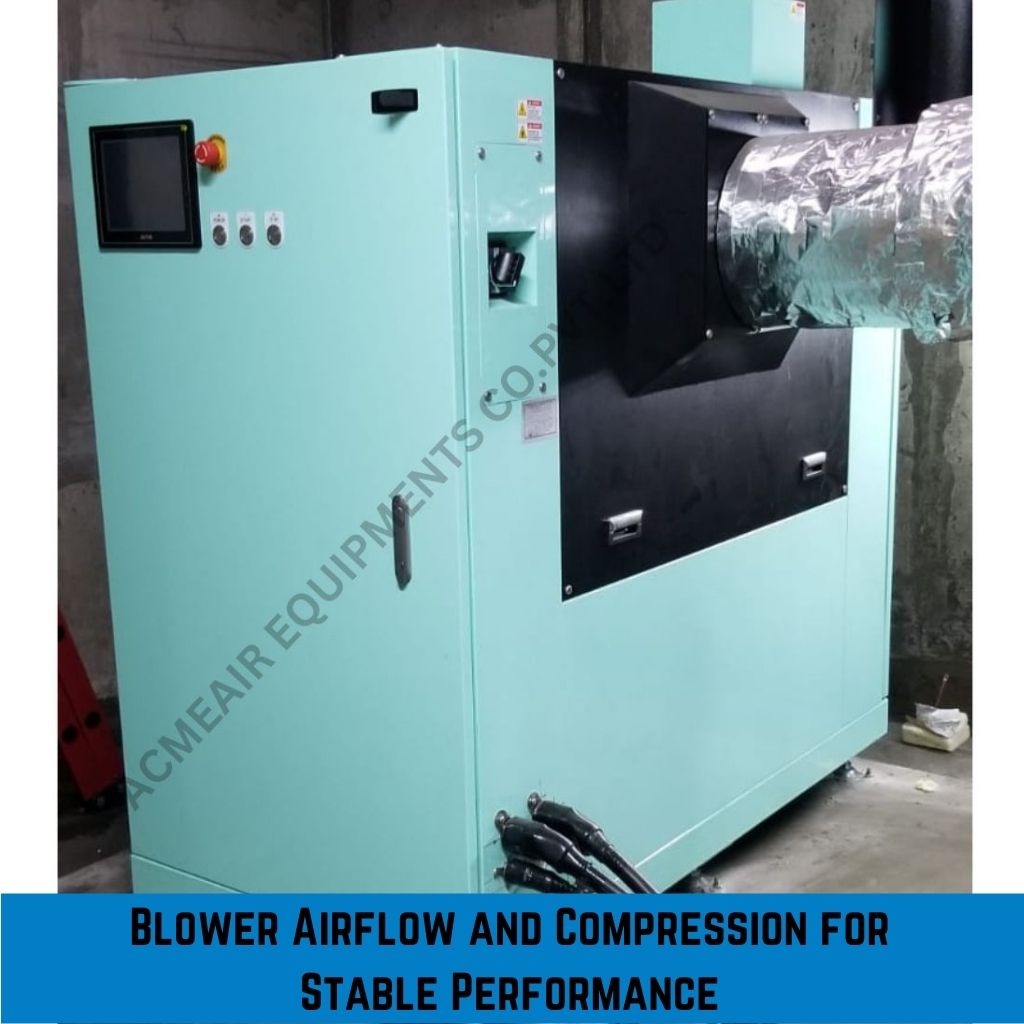
Downstream, the discharge connection must integrate cleanly with plant piping. Smooth elbows, properly sized headers and well-chosen silencers help preserve the performance delivered by the blower. When the internal airflow design is combined with equally thoughtful external ducting, the entire air system behaves as one efficient, reliable unit.
Turbo Blower Air Bearings and Frictionless Support
Turbo Blower air bearings are a key reason modern machines can run at such high speed with minimal mechanical wear. Instead of using rolling elements and oil, these bearings rely on a thin film of air that forms between the shaft and the bearing surfaces once rotation reaches operating speed. The special geometry of the bearing creates pressure in this film, lifting the shaft so that there is no direct contact in normal operation.
The benefits of this approach are significant. With no oil system, there are no oil changes, filters or leakage concerns. The air path remains clean, which is essential wherever process contamination is unacceptable. Friction losses in the bearings are very low, contributing to overall efficiency and helping the blower reach target performance without oversized motors or complex cooling systems.
Designers still take care of moments when the shaft is not fully supported by the air film, such as during startup and shutdown. Auxiliary elements can protect the rotor at low speed and during unusual events. Proper balancing, robust rotor design and clean intake conditions help the air bearings perform consistently over long operating periods. For users, this means less routine mechanical maintenance and a simpler, cleaner blower room.
Turbo Blower: PMSM Motors and Magnetic Drive
Turbo Blower PMSM motors provide the compact, efficient drive that makes the entire concept practical. A permanent magnet synchronous motor uses strong magnets on the rotor and carefully wound stator coils. When the variable frequency drive energizes those coils in a controlled sequence, it creates a rotating magnetic field that the rotor locks onto, converting electrical power into smooth torque.
Because the rotor carries magnets rather than windings, internal losses are reduced and heat generation inside the rotating part remains modest. This improves overall efficiency and eases the burden on the cooling system. The motor can be designed with a high power density, allowing the turbo blower to stay compact while still delivering strong airflow and pressure performance.
By shaping the current and adjusting frequency, the drive keeps the PMSM operating in favorable regions, managing torque and speed in real time. This is what gives a High Speed Turbo Blower its responsiveness and stability. The combination of magnetic design, power electronics and software effectively turns the motor into a smart, finely tuned heart of the blower, rather than a simple spinning device.
Turbo Blower: Multi Core Architecture
Turbo Blower supports multi core architecture refers to the way modern controllers use several processing cores to handle different functions in parallel. One core may focus on high speed motor control, running tight current and speed loops that keep the PMSM stable. Another core watches sensor inputs, looking at temperatures, pressures and vibration indicators. A further core might manage communication with plant control systems, data logging and user interface tasks.
This separation of duties improves reliability and responsiveness. Time critical control loops are not delayed by network traffic or interface updates. Monitoring tasks can run continuously, ready to trigger protective actions if predefined thresholds are approached. Communication services can share detailed information with supervisory systems without distracting the motor controller from its primary job.
From a plant perspective, this digital intelligence makes the blower like a connected asset rather than a standalone machine. Data on performance, operating hours and trending conditions can be used to tune process control, plan maintenance and support troubleshooting. A Turbo Blowers Manufacturer that invests in a robust multi core control platform gives users a stronger foundation for long term, data driven operation.
Turbo Blower: Bearings, VFDS and Cooling Technology Decoded
Turbo Blower offers bearings, VFDs and cooling sit at the center of the phrase technology decoded, because they bring together mechanical, electrical and thermal engineering. The variable frequency drive is the link between the power supply and the PMSM, converting fixed frequency input into a controlled, variable output. It governs how quickly the energy-efficient turbo blower starts, how smoothly it responds to set point changes and how gracefully it stops under normal or emergency conditions.
Cooling is equally important. Motor windings, magnets, power electronics and even the air bearings themselves have preferred temperature ranges. Designers route cooling air through channels around the motor and drive, use heat conducting materials and optimize surfaces so heat can leave critical parts efficiently. Because there is no oil circuit to carry heat away, airflow and conduction take center stage in the thermal design.
Taken together, bearings, VFDs and cooling decide much of the long term reliability of the blower. When these subsystems are well integrated, the machine can run for extended periods with stable temperatures, gentle mechanical loads and clean power delivery. That translates into fewer unplanned interruptions and more predictable lifecycle costs for the operator.
High Speed Turbo Blower Performance and Aerodynamics
Turbo Blower performance depends heavily on aerodynamic design. The impeller blades must guide air smoothly from inlet to exit while avoiding unnecessary turbulence. The diffuser must convert velocity into pressure without exciting flow instabilities. Designers tune blade angles, passage widths and clearances to create a broad operating range with good efficiency and comfortable margins from surge.
Noise and vibration are also shaped by this aerodynamic work. Smooth flow paths tend to produce quieter operation, which can be important in indoor installations or sites with strict noise limits. By refining both the internal flow channels and the external connections, manufacturers build high-speed turbo blowers that run steadily, deliver the required air and integrate into existing plant layouts without creating acoustic or vibration problems.
For users, understanding that aerodynamics sit at the core of performance helps frame discussions about expected operating points, control strategies and piping layouts. When the blower is allowed to operate within its best aerodynamic zone, it rewards the plant with stable, efficient service.
High Speed Turbo Blowers Integration with Plant Systems
High Speed Blowers rarely operate in isolation. They form part of larger aeration systems, process air networks or combustion air trains. Integration with plant control and monitoring systems is therefore crucial. The blower’s controller exchanges signals with supervisory systems, receiving speed or pressure setpoints and providing status, alarm information and performance data.
Well planned integration allows the blower to adjust output according to real process needs rather than fixed assumptions. Airflow can follow oxygen demand in wastewater treatment or production rates in industrial processes. This dynamic behavior avoids over supply and reduces the need for throttling devices, which in turn improves energy efficiency and system stability.
Physical integration matters as well. Adequate space for cooling airflow, maintenance access and safe handling is important during the design stage. When mechanical, electrical and control integration are treated as a single task, the blower becomes an easy fit within the plant rather than a challenging piece of standalone equipment.
Energy-Efficient Turbo Blowers and Lifecycle Benefits
Turbo Blowers are often selected for their ability to reduce power consumption and total cost of ownership. High aerodynamic efficiency, low friction from air bearings and precise variable speed control all contribute to reduced energy use compared with many traditional technologies. Over time, those savings can form a large portion of the financial justification for upgrading equipment.
Lifecycle benefits go beyond power bills. The absence of oil systems reduces consumables, handling tasks and environmental risks. Fewer mechanical parts such as belts or gearboxes mean fewer components that can fail or require frequent adjustment.
For owners and operators, the result is a cleaner, quieter and more predictable air system. When the energy performance, maintenance profile and reliability advantages are viewed together, the case for Energy-Efficient Turbo Blowers aligns well with broader sustainability and efficiency goals across many industries.

Turbo Blowers Manufacturer: Selection and Collaboration
Working with a Turbo Blowers Manufacturer or with multiple manufacturers is about more than comparing efficiency curves. It involves evaluating technical support, digital capabilities, integration experience and long term service arrangements. The best outcomes come from collaborative relationships where process requirements, plant constraints and technology options are openly discussed.
A strong partnership ensures that the blower evolves with the plant. As processes change, digital tools improve or energy targets tighten, the right Turbo Blower Manufacturer can support firmware updates, control strategy refinements or hardware enhancements, keeping the blower fleet aligned with business goals.
Conclusion
Turbo Blower technology becomes much clearer once the main elements are laid out. Air bearings provide clean, almost frictionless support. PMSM motors deliver compact, efficient power. Multi core control architectures coordinate everything through intelligent software, backed by variable frequency drives and carefully engineered cooling paths. Together, these technologies create compact, quiet and Energy-Efficient Turbo Blowers that fit naturally into modern, data driven plants. By understanding how the parts fit together, engineers and decision makers can speak confidently with any supplier, select the right blower for each application and operate their systems with a strong balance of performance, reliability and energy efficiency.
FAQs
What is the main advantage of a Turbo Blower in industrial and municipal applications?
It offers oil free, high efficiency air delivery with precise speed control and reduced mechanical maintenance.
How do air bearings improve blower reliability?
They support the rotor without metal contact, eliminating many wear paths and removing the need for lubricating oil systems.
Why are PMSM motors preferred inside High Speed Turbo Blowers?
They provide high efficiency, compact size and smooth torque under advanced electronic control from the drive.
How does multi core architecture help turbo blower controls?
It separates fast motor control, monitoring and communication tasks so the blower stays responsive, stable and easy to integrate.
What should be reviewed when choosing a Turbo Blower Manufacturer?
Consider bearing and motor design, control and monitoring features, cooling strategy, service support and how well the blower fits your specific process.
About Author

CEO
Mr. Vishwesh Pardeshi is the CEO of Acme Air Equipments Company Pvt. Ltd., an industrial and engineering goods manufacturing company based in Ahmedabad, Gujarat (India). He has taken over the responsibility from founding Partners and Directors of the Company, and is now leading a talented group of professionals since 2020 by bringing in vast industrial and management expertise. By qualification, he holds a Bachelor Degree in Mechanical Engineering and also holds a MBA degree from reputed institutes. Under his leadership, the Company has successfully executed prestigious projects by delivering high quality and world class products from a state of the art manufacturing facility which combines CNC-enabled precision manufacturing and strong after sales support. In line with the Vision, Mission and Core Values of the Organization, Mr. Vishwesh Pardeshi continues to drive Quality, Reliability and Global Expansion at Acme Air Equipments Co. Pvt. Ltd.