






Table of Contents
How pneumatic conveying technology delivers contamination-free material transfer, reduced product degradation, and measurable efficiency gains across flour milling, grain handling, and food ingredient processing.
AI-Generated Summary
- Pneumatic conveying systems use pressurized or vacuum airstreams to transport bulk food and grain materials through enclosed pipelines, eliminating open-belt conveyors and the contamination risks they create.
- Two primary system types — dilute phase and dense phase — serve different materials and process requirements, from light flour and starch to fragile grains and pellets.
- Enclosed pipeline conveying is the foundation of food-grade hygiene compliance, preventing pest ingress, airborne contamination, moisture exposure, and cross-contamination between product lines.
- Vacuum pneumatic systems are particularly valued in grain intake and flour milling for their ability to draw material inward, containing dust within the system rather than releasing it to the production environment.
- Dense phase conveying significantly reduces product degradation, attrition, and dust generation compared to dilute phase — critical for fragile cereals, coated products, and high-value food ingredients.
- Modern food-grade pneumatic systems incorporate hygienic pipe fittings, clean-in-place (CIP) compatibility, smooth-bore tubing, and 3A/EHEDG-compliant diverter valves to meet strict regulatory standards.
- Energy efficiency, flexible routing around existing plant infrastructure, and compatibility with automated control systems make pneumatic conveying a cornerstone of modern food processing facility design.
Introduction: The Case for Pneumatic Conveying in Food and Grain Processing
Moving bulk materials through a food processing facility sounds straightforward — until you factor in the regulatory requirements for hygiene, the fragility of many food ingredients, the fire and dust explosion risks associated with fine powders, and the practical challenge of routing material through a multi-level processing plant without open spillage.
Traditional mechanical conveying — belt conveyors, bucket elevators, screw augers — has served the grain and food industry for over a century. But as food safety standards have tightened, production speeds have increased, and plant footprints have grown more complex, pneumatic conveying systems have emerged as the technology of choice for enclosed, hygienic, flexible material transfer.
Today, pneumatic conveying is the backbone of material handling in flour mills, grain terminals, breakfast cereal plants, snack food facilities, sugar refineries, starch processing operations, and everywhere that bulk food ingredients must move from intake through processing to packaging in a controlled, contamination-free manner.
How Pneumatic Conveying Systems Work
A pneumatic conveying system transfers bulk solid materials through a pipeline using a moving airstream generated by a blower, compressor, or vacuum pump. Material is introduced into the airstream at a feed point, transported through the pipeline, and separated from the conveying air at the destination using a cyclone separator, bag filter, or receiver vessel.
Dilute Phase Conveying
In dilute phase systems, material is suspended in a high-velocity airstream (typically 18–30 m/s) and carried through the pipeline in a fully suspended state. This approach suits light, non-fragile materials such as flour, fine starch, sugar powder, and dried milk. Dilute phase systems are simpler and lower in capital cost but generate more product attrition and dust, and consume more energy per tonne conveyed.
Dense Phase Conveying
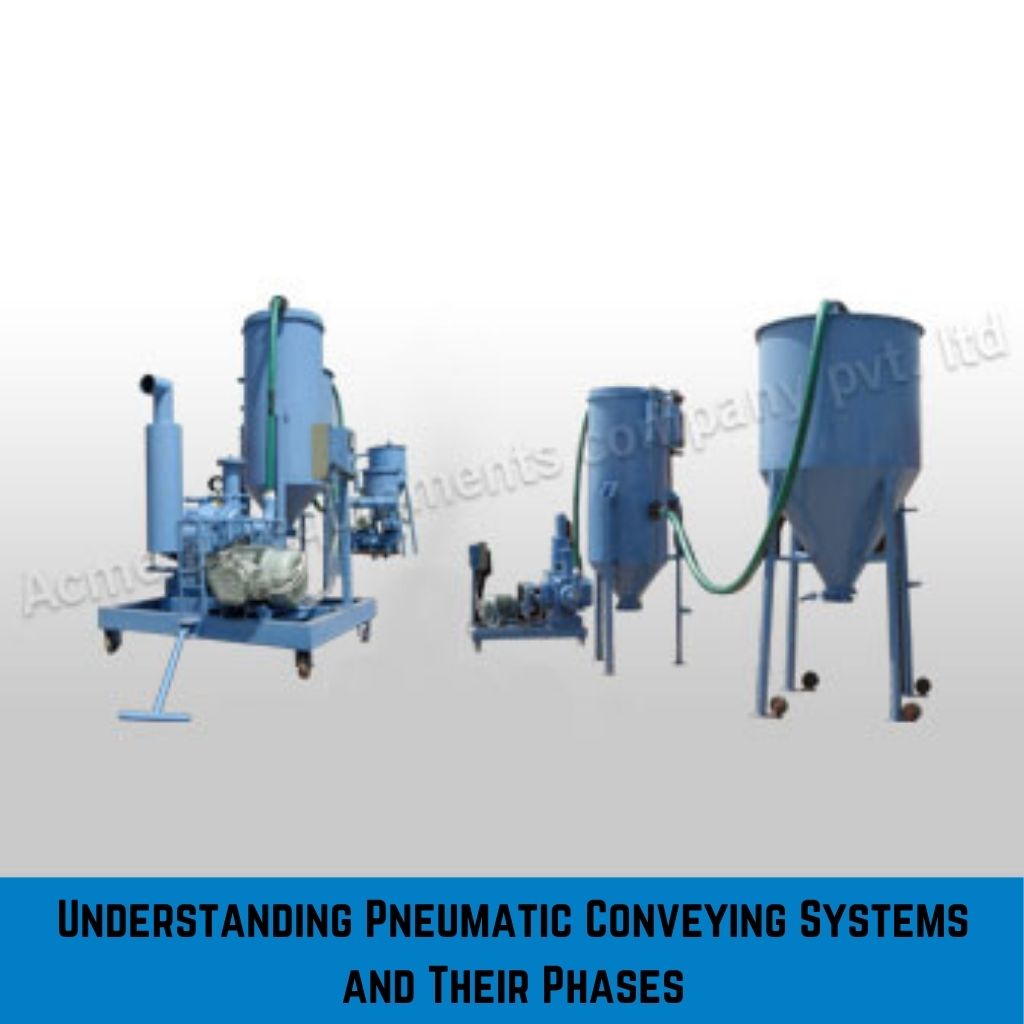
Dense phase systems move material at low velocity (2–8 m/s) in slugs or a moving bed, using higher pressure to push concentrated material plugs through the pipeline. This mode is preferred for fragile materials including breakfast cereals, coated grains, coffee beans, nuts, and spice granules where product integrity must be preserved. Dense phase conveying produces significantly less attrition, dust generation, and pipe wear than dilute phase.
Vacuum vs. Pressure Systems
Vacuum systems draw material into the pipeline using suction, making them ideal for intake applications where material is being pulled from storage, trucks, or railcars into the facility. Any leakage in a vacuum system draws air inward rather than releasing dust outward — an important hygiene and safety advantage in food environments. Pressure systems push material from a single source to one or multiple destinations and are commonly used in flour distribution within a mill or ingredient dosing to mixers and packaging lines.
Key Insight: In food processing facilities handling fine powders such as flour, starch, or icing sugar, vacuum pneumatic conveying systems are preferred at intake points because any pipeline leak draws ambient air inward rather than releasing combustible dust into the production environment.
Hygiene Advantages of Pneumatic Conveying in Food Processing
Food safety is non-negotiable. Contamination events — microbial, physical, or chemical — can trigger product recalls, regulatory action, and lasting brand damage. The enclosed nature of pneumatic conveying systems provides structural hygiene advantages that open mechanical conveyors simply cannot match.
Fully Enclosed Material Transfer
From feed point to destination, product travels entirely within sealed stainless steel or food-grade pipework. There is no open product surface exposed to the production environment, no opportunity for pest access, no risk of foreign body ingress from overhead structures, and no product spillage onto floors or equipment. This enclosed pathway is the single most important hygiene attribute of pneumatic conveying in food applications.
Hygienic Pipeline and Component Design
Food-grade pneumatic conveying systems are engineered to comply with EHEDG (European Hygienic Engineering and Design Group) and 3A Sanitary Standards. This means smooth-bore pipework with no internal crevices, tangential or radiused bends rather than sharp elbows, tri-clamp connections for tool-free disassembly, and diverter valves with full-bore, cleanable interiors. Every component that contacts product is designed to prevent material accumulation that could harbor microbial growth.
Clean-in-Place (CIP) Compatibility
Modern pneumatic conveying systems for allergen-containing or pathogen-sensitive food products are designed for CIP cleaning without disassembly. Automated CIP cycles circulate cleaning solution, rinse water, and drying air through the pipeline and all contact components, validating cleanliness between product changeovers. This capability is essential in facilities handling multiple allergens (nuts, gluten, dairy) on shared conveying lines.
Dust Containment and Explosion Prevention
Fine food powders — flour, sugar, starch, cocoa, dried milk — are combustible when suspended in air at concentrations within the explosive range. Enclosed pneumatic systems contain these dusts within the pipeline rather than releasing them to the building atmosphere. Combined with properly designed receivers, bag filters, and rotary valves, a well-engineered pneumatic system is a fundamental element of a food plant’s dust explosion prevention strategy.
Regulatory Context: ATEX Directive 2014/34/EU and NFPA 652/654 standards require food processors to assess and mitigate combustible dust hazards. Enclosed pneumatic conveying with properly specified filter receivers and rotary airlock valves is widely recognised as a primary engineering control for dust explosion risk reduction in flour and starch handling.
Efficiency Benefits Across Food and Grain Processing Operations
Beyond hygiene compliance, pneumatic conveying delivers measurable operational efficiency benefits that directly impact production economics.
Flexible Routing and Compact Plant Layout
Unlike belt conveyors or bucket elevators that require straight runs and specific vertical angles, pneumatic pipelines can be routed horizontally, vertically, and around corners to reach any point in a processing facility. This flexibility allows pneumatic systems to thread through existing plant infrastructure, reach elevated process equipment such as mixers, bins, and hoppers, and connect intake points to multiple destinations without duplicating equipment.
Reduced Product Loss and Improved Yield
Open mechanical conveyors inevitably generate spillage, dust losses, and residual product at transfer points. Pneumatic conveying minimises product loss by keeping all material within the pipeline from origin to destination. In high-value food ingredient handling — spices, flavourings, protein concentrates, specialty flours — this yield improvement directly impacts profitability.
Automation and Process Integration
Pneumatic conveying systems integrate readily with programmable logic controllers (PLCs), supervisory control systems (SCADA), and recipe-based production management platforms. Automated routing via diverter valves, level-controlled fill cycles, and integration with upstream and downstream process equipment enables food plants to achieve high levels of production automation with minimal manual material handling.
Reduced Labour and Maintenance
Compared to mechanical conveying systems with their chains, belts, buckets, and drive assemblies, pneumatic systems have significantly fewer moving parts. The primary mechanical components are the blower or vacuum pump and rotary airlock valves. This simplicity reduces planned maintenance downtime, spare parts inventory, and the labour required for routine inspection and adjustment.
Specific Applications in Grain and Food Processing
Pneumatic conveying serves distinct functions across the grain and food processing chain:
- Grain terminals and silos: Vacuum pneumatic systems transfer grain from truck, rail, or ship intake to storage bins and from storage to processing or load-out with minimal breakage and dust emission
- Flour milling: Pneumatic conveying moves milled fractions between purifiers, sifters, and reduction rolls, and distributes finished flour to bulk tankers, bagging lines, or ingredient storage
- Breakfast cereal and snack food manufacturing: Dense phase systems transport fragile flakes, puffed grains, and coated cereals from coating drums to packaging with minimal breakage
- Sugar and confectionery: Dilute phase systems handle granulated sugar, icing sugar, and cocoa powder between storage and processing; dense phase suits fragile confectionery pieces
- Pet food and aquafeed: Extruded pellets are conveyed from extruders to dryers and coating systems using dense phase to preserve coating integrity and pellet shape
- Spice and herb processing: Enclosed vacuum conveying prevents volatile aromatic compound loss and cross-contamination between product lines in multi-product facilities
Selecting the Right Pneumatic Conveying System for Food Applications
System selection requires careful analysis of the material’s physical properties, the required throughput, the conveying distance and routing, and the hygiene and regulatory requirements of the specific food product.
Key selection parameters include bulk density and particle size of the material, fragility and attrition sensitivity, moisture sensitivity and hygroscopicity, allergen status and CIP requirements, required throughput in tonnes per hour, pipeline routing geometry and total equivalent length, and applicable food safety standards (BRC, SQF, FSSC 22000, FDA, EFSA). Engaging a specialist pneumatic conveying engineer at project design stage — rather than retrofitting systems to existing plant layouts — consistently delivers better hygienic performance, lower operating costs, and fewer product quality issues across the system’s operational life.
Conclusion
Pneumatic conveying systems have become inseparable from modern food and grain processing. Their enclosed design directly addresses the food industry’s most pressing challenges: hygiene compliance, contamination prevention, dust control, and the need for flexible, automated material transfer in complex processing environments.
Whether moving flour between milling stages, transferring fragile breakfast cereals to packaging, or drawing grain from intake vehicles into storage, pneumatic conveying delivers the combination of hygiene integrity and operational efficiency that food processors require to meet regulatory standards, protect their brands, and operate profitably in an increasingly competitive global market.
Frequently Asked Questions
What is a pneumatic conveying system in food processing?
A pneumatic conveying system transfers bulk solid food materials — such as flour, grain, sugar, or starch — through enclosed pipelines using a moving airstream generated by a blower or vacuum pump. The enclosed design prevents contamination, dust emission, and product spillage, making it a hygiene-critical component of modern food processing facilities.
What is the difference between dilute phase and dense phase pneumatic conveying?
Dilute phase conveying suspends material in a high-velocity airstream, making it suitable for fine, non-fragile powders such as flour and sugar. Dense phase conveying moves material at low velocity in slugs or plugs using higher air pressure, preserving the integrity of fragile products such as breakfast cereals, coated grains, and snack food pieces that would be damaged by high conveying velocities.
Why is pneumatic conveying preferred over belt conveyors in food plants?
Pneumatic conveying transfers material through fully enclosed pipelines, eliminating the open product surfaces, spillage points, and pest access risks associated with belt conveyors. Enclosed conveying is a fundamental requirement of food safety management systems and is specified by standards including BRC, SQF, and FSSC 22000 for high-risk food processing environments.
How does vacuum pneumatic conveying improve dust safety in flour mills?
In a vacuum system, the pipeline operates below atmospheric pressure. Any leak in the pipeline draws ambient air inward rather than pushing flour dust outward into the building. This inward-leakage characteristic prevents the release of combustible flour dust to the production environment, reducing the risk of dust cloud formation and the potential for dust explosions.
Can pneumatic conveying systems be cleaned in place (CIP)?
Yes. Modern food-grade pneumatic conveying systems are designed for CIP cleaning. Smooth-bore pipework, tri-clamp fittings, and full-bore diverter valves allow automated cleaning solutions to circulate through the entire system without disassembly. CIP compatibility is essential in facilities processing allergen-containing products where validated cleaning between product changeovers is required.
What materials of construction are used in food-grade pneumatic conveying systems?
Food-grade pneumatic conveying systems use 304 or 316L stainless steel pipework and components for all product-contact surfaces. Non-contact structural elements may use carbon steel or aluminium. Seals, gaskets, and flexible connections use FDA-compliant elastomers such as silicone or EPDM. All materials are selected to resist corrosion from cleaning chemicals and to meet EHEDG and 3A sanitary design principles.
How is product attrition minimised in pneumatic conveying of fragile food products?
Product attrition is minimised by selecting dense phase conveying for fragile materials, specifying long-radius bends to reduce impact forces at direction changes, operating at the lowest conveying velocity consistent with reliable transport, and using ceramic-lined or wear-resistant bend inserts in high-velocity applications. Correct system design and commissioning are the most effective tools for minimising attrition.
What capacity range do pneumatic conveying systems cover in grain processing?
Pneumatic conveying systems for grain and food processing are engineered across a wide capacity range, from small laboratory or pilot-scale systems handling a few hundred kilograms per hour to large industrial grain terminal systems conveying several hundred tonnes per hour. System capacity depends on pipeline diameter, conveying air velocity, pressure differential, and the bulk density of the material being handled.
Are pneumatic conveying systems energy-efficient compared to mechanical conveyors?
Pneumatic conveying systems generally consume more energy per tonne conveyed than equivalent mechanical systems, particularly in dilute phase configurations. However, the total cost of ownership picture includes maintenance, cleaning, labour, product loss, and hygiene compliance costs where pneumatic systems offer significant advantages. Dense phase systems are considerably more energy-efficient than dilute phase and close the gap with mechanical conveyors for many applications.
What role does pneumatic conveying play in food allergen management?
Enclosed pneumatic conveying systems significantly reduce allergen cross-contamination risk by eliminating open product transfer points where allergen-containing materials could migrate to adjacent product streams. In facilities processing multiple allergens on shared lines, CIP-compatible pneumatic systems with validated cleaning protocols are a critical engineering control in the allergen management programme required by FSSC 22000, BRC, and SQF food safety standards.
About Author
CEO
Mr. Vishwesh Pardeshi is the CEO of Acme Air Equipments Company Pvt. Ltd., an industrial and engineering goods manufacturing company based in Ahmedabad, Gujarat (India). He has taken over the responsibility from founding Partners and Directors of the Company, and is now leading a talented group of professionals since 2020 by bringing in vast industrial and management expertise. By qualification, he holds a Bachelor Degree in Mechanical Engineering and also holds a MBA degree from reputed institutes. Under his leadership, the Company has successfully executed prestigious projects by delivering high quality and world class products from a state of the art manufacturing facility which combines CNC-enabled precision manufacturing and strong after sales support. In line with the Vision, Mission and Core Values of the Organization, Mr. Vishwesh Pardeshi continues to drive Quality, Reliability and Global Expansion at Acme Air Equipments Co. Pvt. Ltd.