






Table of Contents
AI-Generated Summary
This article provides an in-depth analysis of the transformative role Pneumatic Conveying Systems play within the ceramic and tile manufacturing sector. From the initial handling of abrasive raw materials like silica, feldspar, and clay to the precise feeding of spray dryers and press hoppers, pneumatic technology ensures a dust-free, efficient, and automated production flow. We examine the technical distinctions between dilute phase and dense phase conveying, highlighting how the latter minimizes material degradation and equipment wear. The discussion further explores the integration of smart sensors and AI-driven monitoring for predictive maintenance, alongside the global shift toward sustainable, closed-loop systems that eliminate environmental contamination and enhance workplace safety in high-output manufacturing hubs.
Introduction
The ceramic and tile industry is characterized by the handling of vast quantities of dry, bulk powders and granular minerals. Traditionally, these materials were moved via mechanical belts, buckets, and elevators—methods that often resulted in significant dust emission, material loss, and high maintenance costs. The introduction of Pneumatic Conveying Systems has revolutionized this workflow, offering a streamlined, enclosed, and highly automated alternative that meets the rigorous demands of modern architectural surface production.
Understanding the Fundamentals of Pneumatic Conveying
At its core, pneumatic conveying is the process of moving bulk materials through a pipeline using a pressure differential and a gas stream (typically air). In ceramic plants, where raw materials are often abrasive and sensitive to moisture, these systems provide a protected environment that maintains material integrity from the silo to the final press.
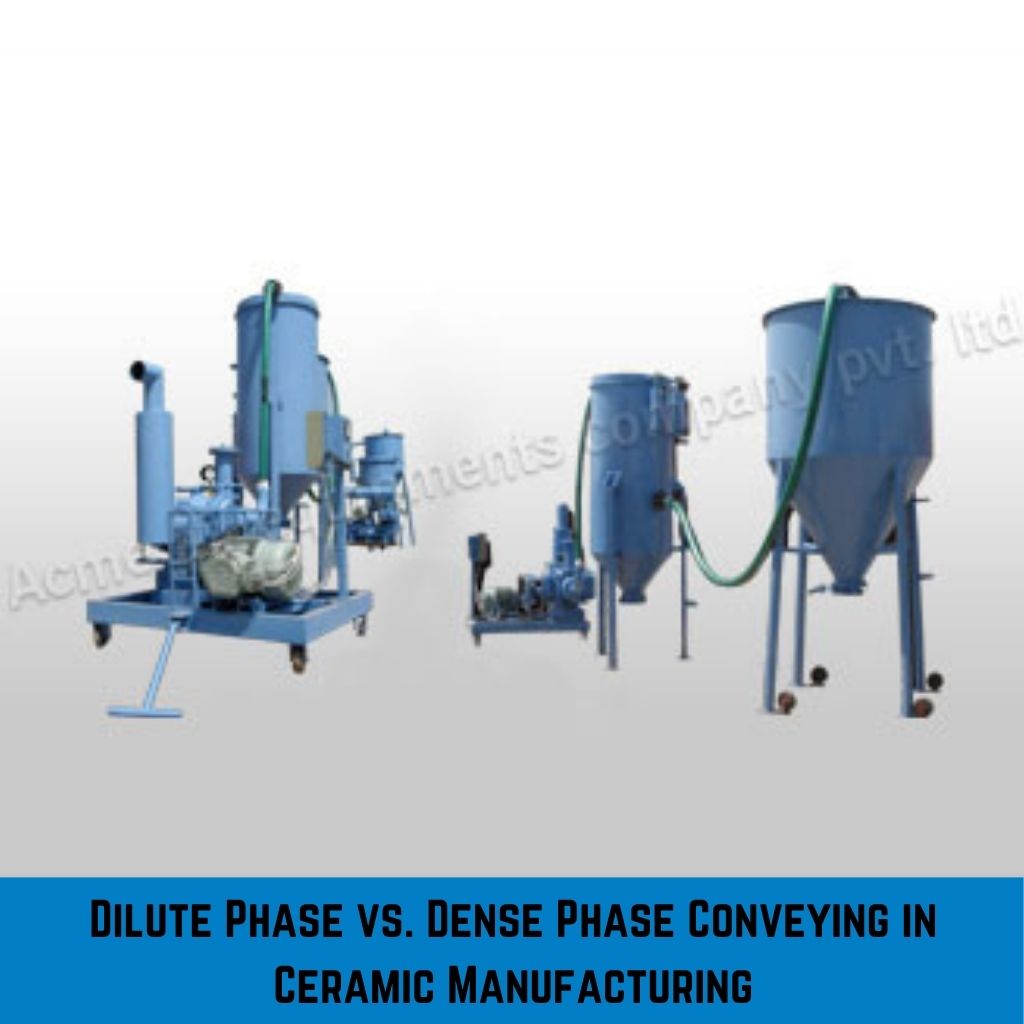
Dilute Phase vs. Dense Phase Conveying
The choice between conveying phases is critical in ceramic manufacturing:
- Dilute Phase: Materials are suspended in a high-velocity air stream. This is ideal for lighter materials or shorter distances where high-speed throughput is the primary goal.
- Dense Phase: Materials are pushed at lower velocities in “slugs” or batches. For the ceramic industry, dense phase conveying is often preferred for abrasive raw materials like calcined alumina or silica sand. The lower velocity significantly reduces pipe erosion and prevents the “de-mixing” of pre-blended ceramic bodies.
Key Applications of Pneumatic Conveyor System in the Production Cycle
Pneumatic systems are integrated into several critical stages of the tile manufacturing process, ensuring that the transition from raw earth to finished porcelain is seamless.
Raw Material Unloading and Storage
The journey begins with the arrival of bulk raw materials. Pneumatic conveyor systems allow for the rapid unloading of tanker trucks and railcars directly into storage silos. Because the system is entirely enclosed, there is zero risk of environmental contamination or material loss due to wind or spillage.
Precision Batching and Weighing
The “recipe” for a high-quality ceramic tile requires exact proportions of clay, quartz, and fluxing agents. Pneumatic conveyors, integrated with load cells and automated valves, transport these specific quantities to blenders with milligram precision. This automation eliminates human error and ensures consistency in tile strength and color across different production batches.
Feeding Spray Dryers and Press Hoppers
Once the ceramic “slip” is spray-dried into granules, these granules must be transported to the pressing area. Pneumatic conveying is the most effective way to feed multiple press hoppers from a centralized storage point. The enclosed pipes prevent the granules from picking up ambient moisture, which is vital for achieving the correct density during the pressing stage.
Our Other Product
Catalyst Loading / Unloading SystemsEnhancing Workplace Safety and Environmental Standards
One of the most significant advantages of pneumatic technology is the elimination of fugitive dust. In ceramic plants, silica dust is a major health hazard (Silicosis). By moving materials through hermetically sealed pipes, manufacturers can maintain a clean, breathable atmosphere that complies with stringent global health and safety regulations.
Furthermore, these systems contribute to a “zero-waste” manufacturing model. Any material that escapes during traditional mechanical handling is lost profit; in a pneumatic system, every gram of raw material stays within the production loop.
Technological Integration: AI and Predictive Maintenance
As the industry moves toward “Industry 4.0,” pneumatic conveying systems are becoming increasingly “smart.” Integrated sensors monitor air pressure, flow rates, and pipe temperature in real-time. By utilizing AI-driven analytics, plant managers can predict when a pipe section is thinning due to abrasion or when a filter needs replacement. This shift from reactive to predictive maintenance ensures that the production line remains operational 24/7, maximizing the return on investment (ROI).
The Global Shift Toward Automation
From the massive manufacturing clusters in Castellón, Spain, and Sassuolo, Italy, to emerging hubs in India and Southeast Asia, the adoption of pneumatic conveying is a hallmark of a competitive facility. As global demand for high-end porcelain slabs and large-format tiles grows, the ability to move materials over long distances and through complex factory layouts without manual intervention is no longer a luxury—it is a necessity.
Frequently Asked Questions
Pneumatic Conveying Systems Role in Ceramic and Tile Manufacturing
What are the main components of a pneumatic conveying system in a ceramic plant?
A standard system includes a prime mover (fan, blower, or compressor), a material feeder (such as a rotary valve or pressure vessel), the conveying pipeline, and a dust collection or separation unit at the destination silo.
How does pneumatic conveying prevent material degradation?
By using dense phase conveying, materials are moved at low velocities. This minimizes the impact between particles and the pipe walls, ensuring that fragile granules—such as those created in a spray dryer—remain intact and ready for pressing.
Can pneumatic systems handle abrasive materials like silica and feldspar?
Yes. Modern systems use reinforced elbows (often with ceramic linings) and low-velocity dense phase technology to specifically handle abrasive minerals without frequent equipment failure.
Is it possible to convey multiple materials through the same pipeline?
While possible, it requires a thorough "purge" cycle between different materials to avoid cross-contamination. Most high-output plants use dedicated lines for major ingredients to ensure color and structural purity.
How does this technology improve energy efficiency?
While pneumatic systems require power for air compression, they reduce the need for multiple mechanical motors associated with belts and elevators. Additionally, automated controls optimize air usage based on the specific material load, reducing wasted energy.
What is the maximum distance a pneumatic system can move ceramic powders?
With modern compressors and booster stations, materials can be moved several hundred meters horizontally and dozens of meters vertically, allowing for flexible factory designs that aren't limited by linear mechanical paths.
How does humidity affect pneumatic conveying?
High humidity can cause powders to clump or stick to pipe walls. To combat this, many ceramic manufacturers integrate air dryers or dehumidifiers into the pneumatic system to ensure the conveying air is bone-dry.
What maintenance is required for these systems?
Routine maintenance involves checking the seals on rotary valves, inspecting pipe elbows for wear, and ensuring the filter bags in the dust collectors are clean. AI-enabled systems can now automate these alerts.
Does pneumatic conveying help with ISO or environmental certifications?
Absolutely. Because the systems are dust-free and prevent spillage, they are instrumental in helping ceramic plants achieve ISO 14001 (Environmental Management) and OHSAS 18001 (Occupational Health and Safety) certifications.
Why is pneumatic conveying better than mechanical conveying for tile plants?
It offers a smaller footprint, greater flexibility in routing around existing machinery, lower labor costs through automation, and a significantly cleaner and safer working environment by containing all dust.
CEO
Mr. Vishwesh Pardeshi is the CEO of Acme Air Equipments Company Pvt. Ltd., an industrial and engineering goods manufacturing company based in Ahmedabad, Gujarat (India). He has taken over the responsibility from founding Partners and Directors of the Company, and is now leading a talented group of professionals since 2020 by bringing in vast industrial and management expertise. By qualification, he holds a Bachelor Degree in Mechanical Engineering and also holds a MBA degree from reputed institutes. Under his leadership, the Company has successfully executed prestigious projects by delivering high quality and world class products from a state of the art manufacturing facility which combines CNC-enabled precision manufacturing and strong after sales support. In line with the Vision, Mission and Core Values of the Organization, Mr. Vishwesh Pardeshi continues to drive Quality, Reliability and Global Expansion at Acme Air Equipments Co. Pvt. Ltd.