






Table of Contents
Why Preventive Maintenance Matters for Roots Blowers
A roots blower runs with very close clearances between the two counter rotating lobes and between the lobes and the casing walls. These clearances, typically 0.1 to 0.4 millimetres depending on the machine size, are maintained by precision timing gears that synchronise the two shafts without any direct contact between the lobes themselves. If the timing gears lose lubrication, the clearances change, and the lobes make contact, which causes immediate and severe damage.
Similarly, the bearings that support the two rotor shafts carry both radial and axial loads from the gas pressure differential. Bearing failure causes rotor runout that quickly leads to lobe contact. Neither gear failure nor bearing failure gives much warning before catastrophic damage occurs, which makes planned preventive maintenance far more cost effective than reactive repair.
Daily Checks (Every Operating Day)
Visual and instrument checks
- Check blower discharge temperature. Normal operating temperature for an air cooled machine is typically 60 to 100 degrees Celsius above ambient at the design differential pressure. A rise of more than 15 degrees above the established normal indicates a problem
- Check discharge pressure against the process requirement. A significant rise indicates a blocked filter or system restriction. A significant drop indicates a leak or worn lobes
- Listen for unusual sounds. A roots blower running normally produces a regular rhythmic pulsation noise. A beating or whirring sound at a frequency different from the rotor frequency indicates a bearing issue. A metallic knocking indicates lobe contact
- Check oil sight glass on gear end cover to confirm oil is at the correct level and is not milky or discoloured
- Inspect inlet air filter indicator if fitted and clean or replace filter element if the vacuum drop across the filter has reached the replacement threshold
Weekly Checks
- Check flexible coupling condition between motor and blower. Inspect rubber spider or disc pack for cracks, deformation, or oil contamination. A deteriorating coupling increases vibration transmitted to the bearings
- Check belt tension and belt condition if V belt drive is used. Under tension causes belt slip and overheating. Over tension loads the shaft bearings excessively. Use a belt tension meter to verify tension against the manufacturer specification
- Check all pipe flanges and casing joints for air leaks using soapy water solution. Any bubbles at a joint should be addressed promptly
- Verify that the pressure relief valve is not leaking or weeping, which indicates it may be set too low relative to the normal operating pressure
Monthly Checks
Lubrication and oil analysis
- Check gear end oil level and top up as required with the specified oil grade. Most Acme roots blowers use ISO VG 220 gear oil in the timing gear housing. Check the machine manual for the correct specification for your model
- Check bearing housing oil level on drive end and non drive end bearings where separately lubricated bearing housings are fitted
- Check oil for evidence of contamination. Metallic particles in the oil indicate gear or bearing wear. A milky appearance indicates water ingress, which commonly occurs when a machine is shut down in a humid environment and condensation forms inside the casing
- Inspect inlet filter element and replace if differential pressure across the filter exceeds the manufacturer’s specification. Blockage of the air inlet is one of the most common causes of overheating and reduced performance
Three Monthly Checks
- Measure vibration velocity at each bearing location using a hand held vibration meter. Record the values as a trend. ISO 10816 guidelines for machines of this type specify that vibration velocity should not exceed 2.8 millimetres per second RMS for new machines and 4.5 millimetres per second for machines in service. Rising vibration trend is the most reliable early warning of bearing deterioration
- Check shaft seal condition on the blower casing. Lip seals or mechanical seals separating the gas side from the gear and bearing lubricant should not be leaking oil into the gas stream or allowing gas to migrate into the gear housing
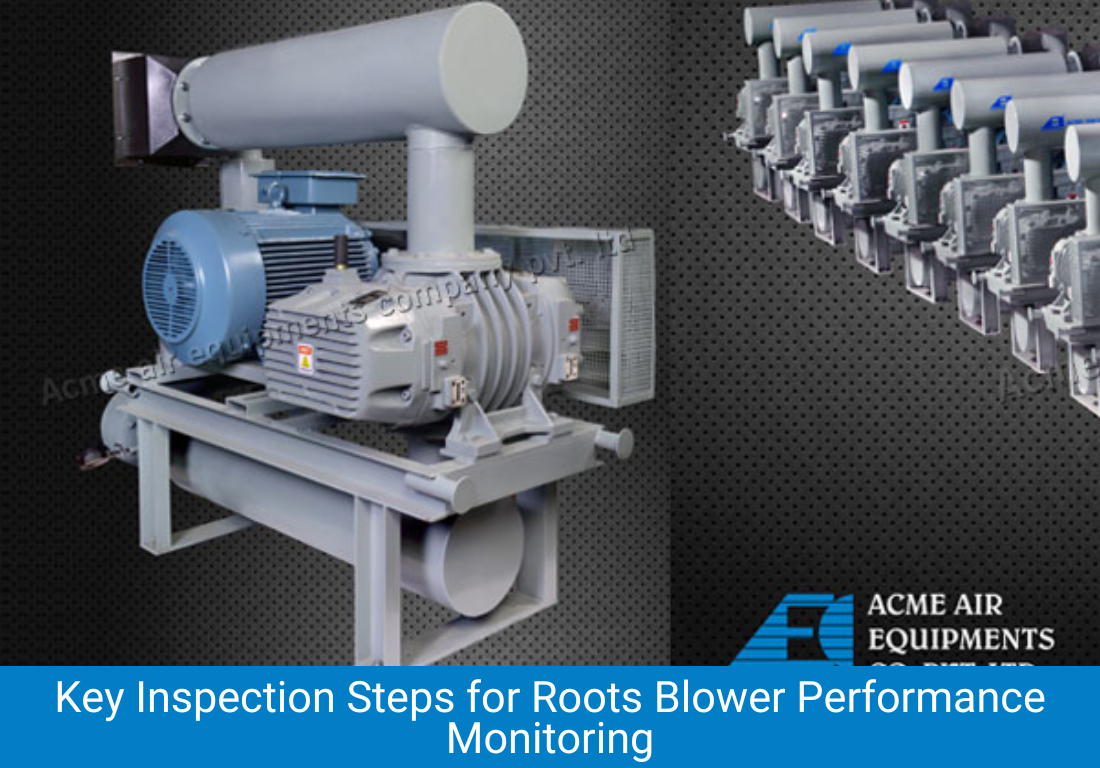
- Inspect the discharge silencer if fitted. A blocked silencer increases back pressure on the blower. Check that the discharge silencer drain valve is open and functioning
- Verify motor current draw and compare with the nameplate rating. Current significantly above the nameplate value at the normal operating conditions indicates mechanical overloading
Annual Overhaul
Full inspection and component replacement
- Drain and replace timing gear oil completely. Clean the gear housing sump of any accumulated metallic debris. Inspect gear tooth condition and gear clearances before refilling
- Remove and inspect bearings at annual service. Replace bearings according to the calculated L10 bearing life from the manufacturer’s documentation, regardless of apparent condition. Bearing life at rated speed and load is typically 25,000 to 40,000 operating hours
- Measure lobe clearances using feeler gauges or dial indicators at the four standard measurement positions for the machine size. Compare with the factory clearance specification. Clearances that have grown beyond 150 percent of the original value indicate lobe or casing wear
- Inspect inlet filter housing and filter element mounting seats for corrosion or distortion that could allow unfiltered air to bypass the element
- Check and re torque all foundation bolts and pipework flanges
- Record all measurements in a machine history file for trend analysis at the next annual service
Warning Signs That Indicate Immediate Attention
The following signs should cause immediate investigation and, if necessary, shutdown:
- Sudden rise in discharge temperature of more than 25 degrees above the established normal
- Metallic knocking or scraping sound that was not present previously
- Smell of burning oil from the gear housing or bearing areas
- Unusual vibration that has appeared suddenly rather than gradually
- Oil leakage from shaft seals onto the blower casing
- Discharge pressure consistently higher than normal operating values, which may indicate a system blockage loading the blower beyond its design pressure
Frequently Asked Questions
What oil should be used in the timing gear housing of a roots blower?
Most industrial roots blowers use ISO VG 220 gear oil in the timing gear housing. Some manufacturers specify a lower viscosity of ISO VG 150 for high speed machines or ISO VG 320 for large, slow speed machines. Always refer to the specific model operation manual for the correct oil grade. Acme Air Equipments uses ISO VG 220 in most of its roots blower and rotary compressor models.
How often should bearings in a roots blower be replaced?
Bearing replacement interval should be based on the calculated L10 life from the bearing manufacturer's data for the specific operating speed, load, and temperature. As a general guide, angular contact bearings in a roots blower at normal duty run at design speed should be replaced every 25,000 to 40,000 operating hours, which corresponds to 6 to 10 years of continuous operation. Vibration monitoring is the most reliable method for identifying bearings that should be replaced earlier.
Why is my roots blower running hotter than normal?
Elevated discharge temperature in a roots blower is almost always caused by one of three things: the system back pressure has risen above the design differential pressure, increasing internal gas slippage and compression heat; the inlet air filter is partially blocked, reducing the mass flow of air and increasing specific compression energy; or the cooling system is inadequate, whether a blocked fin on an air cooled machine or reduced cooling water flow on a water cooled unit. Check all three in this sequence.
About Author
CEO
Mr. Vishwesh Pardeshi is the CEO of Acme Air Equipments Company Pvt. Ltd., an industrial and engineering goods manufacturing company based in Ahmedabad, Gujarat (India). He has taken over the responsibility from founding Partners and Directors of the Company, and is now leading a talented group of professionals since 2020 by bringing in vast industrial and management expertise. By qualification, he holds a Bachelor Degree in Mechanical Engineering and also holds a MBA degree from reputed institutes. Under his leadership, the Company has successfully executed prestigious projects by delivering high quality and world class products from a state of the art manufacturing facility which combines CNC-enabled precision manufacturing and strong after sales support. In line with the Vision, Mission and Core Values of the Organization, Mr. Vishwesh Pardeshi continues to drive Quality, Reliability and Global Expansion at Acme Air Equipments Co. Pvt. Ltd.